Our kithul
From the tree, not the packet.
The lounge is the last step of a much longer job: finding good kithul, grading it, and paying the farmers properly for it.
The founder
Lahiru Dilshan grew up among the palms.
He is from Ratnapura, where his family grew kithul trees, so the taste of treacle and jaggery was ordinary to him. What he noticed later was that good kithul had become hard to buy. A year after leaving school he decided to work on that full time.
Today the kithul is graded at his factory in Ratnapura. Every bottle carries a batch number, so it can be traced back to the tree it came from. He visits farmers himself, inspects what they bring, and hands them a book that explains the grades, so they can see exactly what premium quality is worth.
He does not take bulk orders either. For export, only ten bottles leave at a time.
"I would rather let the display cases stay empty than sell an inferior product."
Lahiru Dilshan, founder
How it got here
Ten years of one ingredient.
A year after leaving school, he commits to the kithul trade and starts learning it at trade shows and expos.
He takes a course at the Industrial Development Board and begins bottling kithul treacle.
Part of the factory opens, pandemic and all. Sugar is banned there too.
He develops a kithul butter.
A shop opens in Kottawa selling treacle, jaggery and food made with them. Customers keep asking for a bigger place.
Only Kithul Lounge opens on Fife Road, Colombo 5.
Before the first drop
It starts with a climb.
Tapping a kithul palm begins with Hera Bendeema, fixing a climbing support to the trunk. Only then can the flower be worked. Every bottle in the lounge starts with someone going up a tree.
The farmers
Paid above the market, on purpose.
Trained, not just bought from
Farmers are trained on what each grade needs and given a book that sets out the criteria, so they can aim at the premium grade themselves.
Paid more than the going rate
Better pay for better tapping. The founder says a good month can bring a farmer one to two lakhs.
Traceable to the tree
Grading happens at the Ratnapura factory, and every bottle leaves with a batch number that points back to where it started.
Sri Lanka's kithul trade is on the UNESCO Representative List of the Intangible Cultural Heritage of Humanity. Getting that craft the recognition it deserves is the point of the whole project, and the lounge is one part of it.
In the room
A lounge that explains itself.
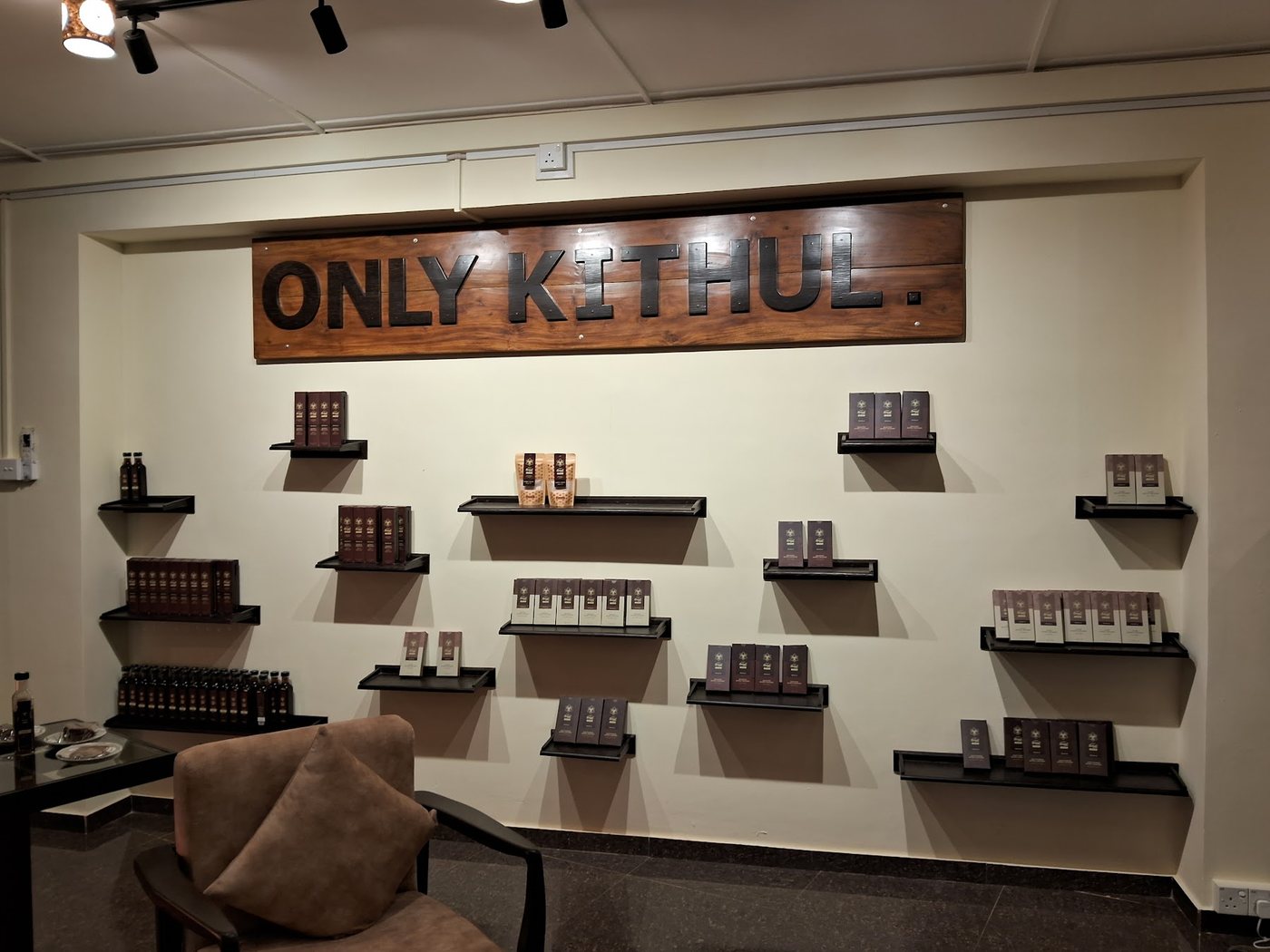
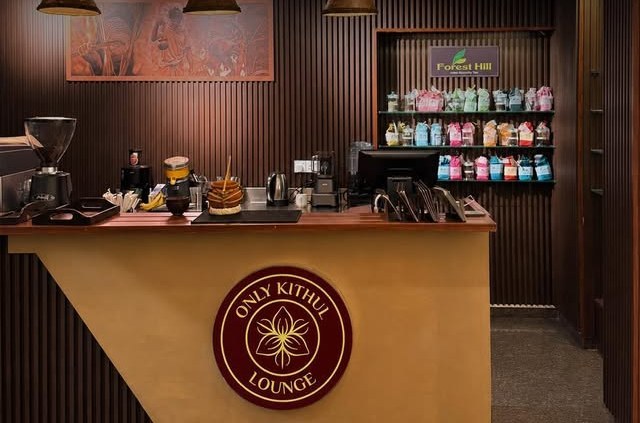
Alongside the tables there is material on what kithul does for you, and a display of the tools used to tap and boil it. If the founder is in, he will tell you the rest himself.
Next on his list: tours out to the plantations so guests can meet the farmers, and eventually plantations of his own.
More of the lounge
Come and have a look.